Busy with foresight, but is it actually changing decisions
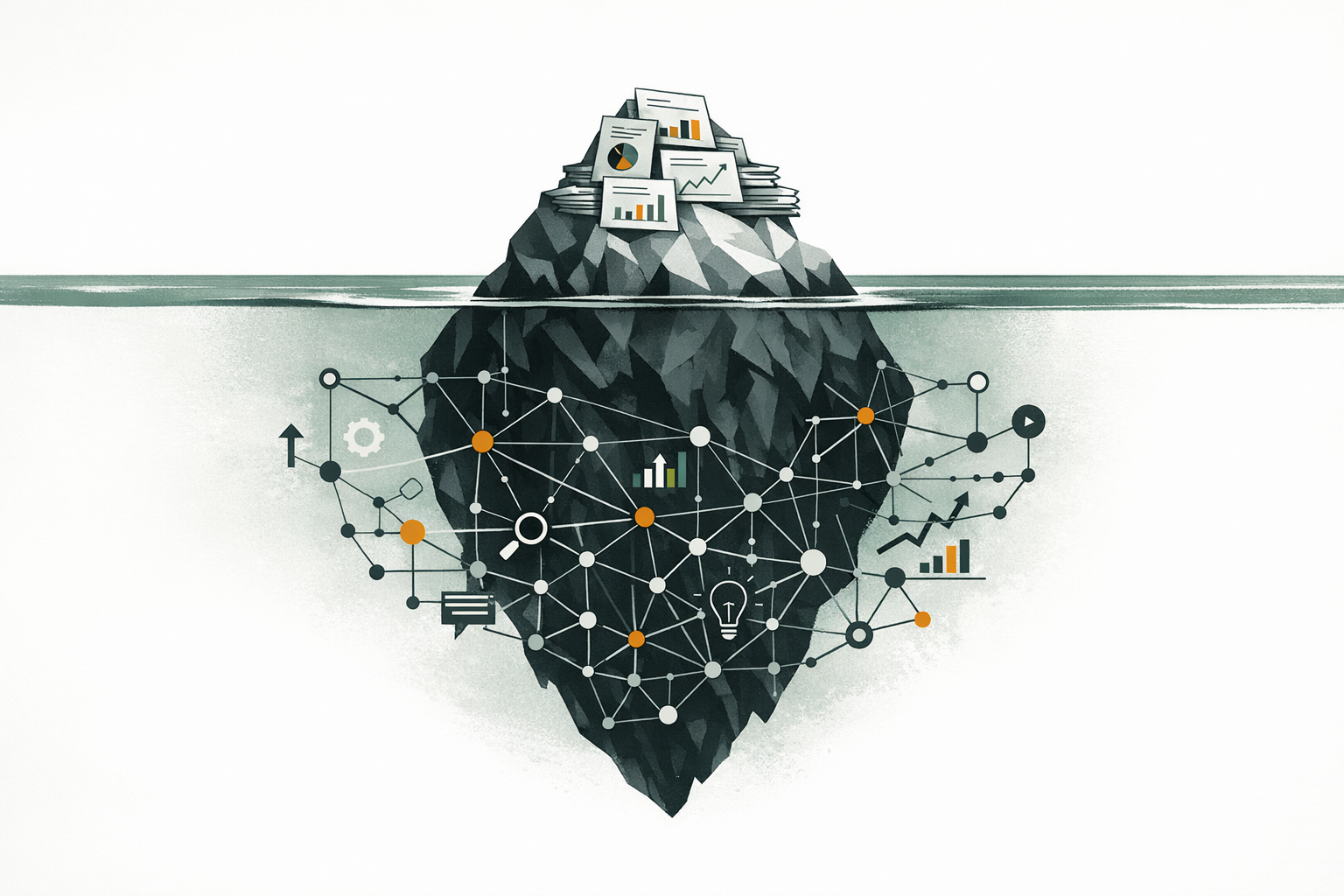
When multiple people contribute to foresight and you are still running it in decks and spreadsheets, alignment quietly becomes your full-time job.
I have seen and experienced this moment. Teams are scanning more sources. Workshops are filling up. Signals are piling in from different parts of the organization. And yet, instead of freeing up time for interpretation and strategic conversations, the work starts to feel heavier. Versions multiply. Ownership blurs. Updating last quarter’s insights becomes a project in itself.
When I then ask a simple follow-up question, the room sometimes goes quiet: Which real strategic decision did this influence last?
Being busy with foresight is not the same as building a foresight capability.
Over the years, working with organizations across corporate foresight, strategy, innovation, R&D, and risk, I have learned that the difference between the two is subtle but decisive. It determines whether futures intelligence remains an inspiring side activity or becomes part of how the organization actually navigates an uncertain business environment and shapes its future.
Let me explain what I mean.
What “busy with foresight” usually looks like
Most foresight practices start in a very healthy way: A small group of motivated people starts gathering signals of change and emerging trends through horizon scanning. Someone curates trend reports. A scenario workshop sparks great conversations. A future outlook lands well with leadership.
But as expectations grow, a familiar pattern often emerges:
-
Insights live in slide decks prepared for specific moments
-
Signals are collected, then quietly forgotten
-
Each project starts more or less from scratch
-
Knowledge sits with individuals rather than the organization
-
Outputs feel interesting, but loosely connected to real decisions
There is nothing wrong with this stage. In fact, almost every foresight function goes through it.
The challenge appears when the context shifts.
Leadership asks for faster answers.
New business units want to contribute.
The strategy cycle tightens.
Risk teams want early warnings.
Innovation units want opportunity spaces.
Manual setups are usually optimized for the situation that existed when they were built, not for the one that suddenly emerges next.
Why activity does not automatically lead to impact
Here is the uncomfortable truth: foresight often fails because the system around the thinking does not scale. When foresight is treated as a series of projects, it tends to struggle with three things:
Continuity
Insights do not compound over time. Each cycle resets the knowledge base.
Governance
There is no shared foresight process, no common way to classify, assess, and revisit signals and trends.
Decision linkage
Outputs are delivered to leaders, but not embedded in the strategic planning, investment reviews, innovation portfolios, or enterprise risk discussions where choices are actually made.
This is where many foresight professionals feel a quiet frustration. They are producing thoughtful work, but they sense it is not traveling far enough inside the organization. They want to be seen as strategic partners, not just interesting commentators.
That ambition is often the first real sign of foresight maturity.
Foresight maturity: what mature teams do differently
When foresight becomes impactful, something fundamental shifts. Teams stop asking, “What trends should we publish this year” and start asking:
-
What upcoming decisions involve the most uncertainty and ambiguity?
-
Which assumptions underpin our current strategy and how might they be challenged?
-
What emerging risks could disrupt our business model or industry?
-
Where might the next growth curves or opportunity spaces emerge?
From there, they design their foresight workflows backwards from those questions. In mature corporate foresight practices, I typically see:
-
Continuous horizon scanning rather than one-off projects
-
Shared taxonomies and evaluation criteria across teams
-
Clear ownership of monitoring domains, trends and scenario developments
-
Regular moments where insights are revisited and updated
-
Direct links between foresight outputs and startegic conversations
-
Cross-functional participation from innovation, risk, R&D, and business units
Foresight becomes a living system, not a reporting cycle. It is no longer something the organization does once a year. It becomes something the organization relies on and benefits from.
The clearest readiness signal: thinking end to end
One of the strongest indicators that a team is ready for its next step is when it starts designing foresight as an end-to-end process.
From scanning signals of change,
to collective sensemaking,
to scenario building,
to informing decisions,
and then looping back as new evidence arrives.
Teams that think this way are no longer experimenting at the edges. They are trying to institutionalize futures intelligence.
That is a healthy and ambitious move. It is also the moment when folders, spreadsheets, and static decks usually begin to feel insufficient, not because they are bad tools, but because they were never meant to act as the backbone of a long-term organizational capability.
Where foresight platforms come in, quietly but decisively
At this stage, many teams begin exploring a purpose-built foresight platform because they need:
-
A shared workspace across functions and regions
-
Traceability from weak signals to trends to strategic narratives
-
Living radars and visualizations that evolve over time
-
Automation for repetitive scanning and first-draft structuring
-
Institutional memory that survives team changes
In our own work at FIBRES, we often see organizations reach out at precisely this point. They are already doing serious foresight. What they are missing is infrastructure that would support their work.
If you feel this is you, you're welcome to book a personal walkthrough of our platform to find out how well it would fit your needs.
What usually surprises them is that the biggest benefit is not speed, although that matters. It is clarity.
When signals, assessments, scenarios, and radars live in one connected system and update as new information arrives, foresight becomes easier to trust, easier to revisit, and easier to defend in front of leadership. Workshops become more dynamic. Strategy conversations become more evidence-based. Insights stop expiring after the meeting ends.
That is when impact really starts to compound.
Foresight maturity self-check: are you platform-ready
If you are wondering where your own team sits today, try reflecting honestly on these questions:
-
Do our foresight insights persist across years, or reset each cycle?
-
Can multiple teams work on the same signals and trends at the same time?
-
Can we trace major strategic choices back to documented future assumptions?
-
Do our tools support live workshops and collaborative sensemaking?
-
Are we scanning continuously, or only when a project kicks off?
-
Could someone new join the team and quickly understand our foresight logic?
If several of these feel difficult right now, that is not a failure. It is usually a sign that your foresight work has grown up faster than your operating model and it might be time to move onto a proper foresight platform.
Many teams at this stage find it helpful to run a short readiness assessment to pinpoint where their process starts to break and where investment would create the biggest lift.
A final reflection
The organizations I admire most are not the ones producing the thickest trend reports. They are the ones that quietly build foresight into how decisions get made. That shift starts with asking better questions about purpose, impact, and process.
What are we really trying to change with foresight?
Which conversations should it shape?
Which strategic decisions should it inform?
Those reflections are often more powerful than any tool choice.
I would be genuinely curious to hear how you think about this in your own organization. Where does your foresight practice sit today, busy, or becoming truly systemic?

Sakari Nisula Head of Customer Success & Foresight at FIBRES. Combining experience from academia and business, he is a hands-on foresight practitioner helping organizations navigate emerging trends, build future-oriented strategies, and foster innovation. He also brings an AI-forward lens to foresight, exploring how human–AI collaboration can accelerate futures intelligence without losing human judgment and purpose.
Stay in the loop
Get our latest foresight tips delivered straight to your inbox. You may unsubscribe from these communications at any time.