
AI seems to be changing our ways of working, but the real shift is structural and defined by the way we use AI tools
A recent Futures Finland discussion on how AI is changing futures work raised a familiar question for many futurists: What actually changes when AI enters the foresight process?
The most visible answer is speed.
The most hyped: efficiency.
The least discussed: procedures, and the amount of testing and iteration required to make processes work seamlessly with foresight practices.
We see how scanning becomes faster, synthesis can be built in seconds and logic explained, and draft outputs, such as scenarios, appear sooner than before. The public does not see how much effort goes into verifying each step, rebuilding prompts to ensure quality, and rethinking the ways we divide human and AI-intensive work.
It is much more work, a new kind of critical thinking, exhaustive trial and error, and endless decisions that need to be made. I enjoy just sitting and writing a scenario narrative by hand, but it is not necessarily the best option anymore.
AI is not changing anything. The way we use it does.
The deeper shift is structural: AI is beginning to alter how foresight work is distributed across people, tools, and decision-making contexts.
In many organizations, the old bottlenecks are easy to recognize. Skilled people still spend much time collecting signals, formatting findings, rewriting summaries, and rebuilding material that already exists somewhere else. This does not only slow teams down. It also reduces the time available for interpretation, challenge, dialogue, and strategic use.
We see examples of people building their own foresight tools, vibe coding, and even general LLMs opening new perspectives. How much time and effort are put into these “evening projects”? As with using any new tools: a lot. However, every hour is a learning opportunity, so it feels worth it.
Trialing is important, but so is the continuity of core foresight processes. The useful role for AI in foresight is not replacing futurists or creating foresight vibe coders. It is more about reducing manual friction so that more energy can move toward sensemaking, comparison, and action.
Use of AI is killing the old habit: treating foresight as output production is officially not enough.
Great reports can be created in minutes. Using them is the real development focus.
A common pattern in foresight is that good work gets translated into polished outputs, delivered into meetings and presentations, and then gradually disconnected from daily decisions.
The problem is not AI, nor weak analysis, but the inability or lack of understanding of how to use results with decision-makers. More often, it is interrupted continuity: signals are captured, decks are built, and insights are presented, but the work does not stay alive long enough to shape what happens next.
If AI is inserted into this model without changing the structure, it may only accelerate the production of more disconnected content. In that case, organizations get faster reports, not stronger futures intelligence, nor the full benefits of foresight activities.
This is why the question is not whether AI can help with foresight. It can. The more important question is where in the foresight system it creates value, and where it risks amplifying noise, bias, or false confidence.
Where could AI help?
AI is especially useful in parts of foresight work where scale, repetition, and structure matter more than originality. This includes scanning large volumes of material, clustering weak signals (not good at collecting them, but skilled at grouping them based on themes found by futurists), generating first-draft summaries, organizing evidence and references (not without errors), supporting translation or interpretation of well-written rules (such as legislation), and surfacing alternative angles that human teams may overlook at first glance (ask AI, “what am I missing?” or “debate my claims with other views supported by facts”). If you have the courage and enough data to give AI, ask about your assumptions.
When used well, this changes the rhythm of foresight work. It can even reduce bias in human work and teach a lot about blind spots. Teams can move more quickly from raw input to discussions about meaning, face different views or difficult options, explore implications that stress points of view not spotted by team members, and add choices that were previously unknown.
It becomes easier to maintain continuity because the effort required to keep signals, themes, and trend libraries alive is lower than in fully manual systems.
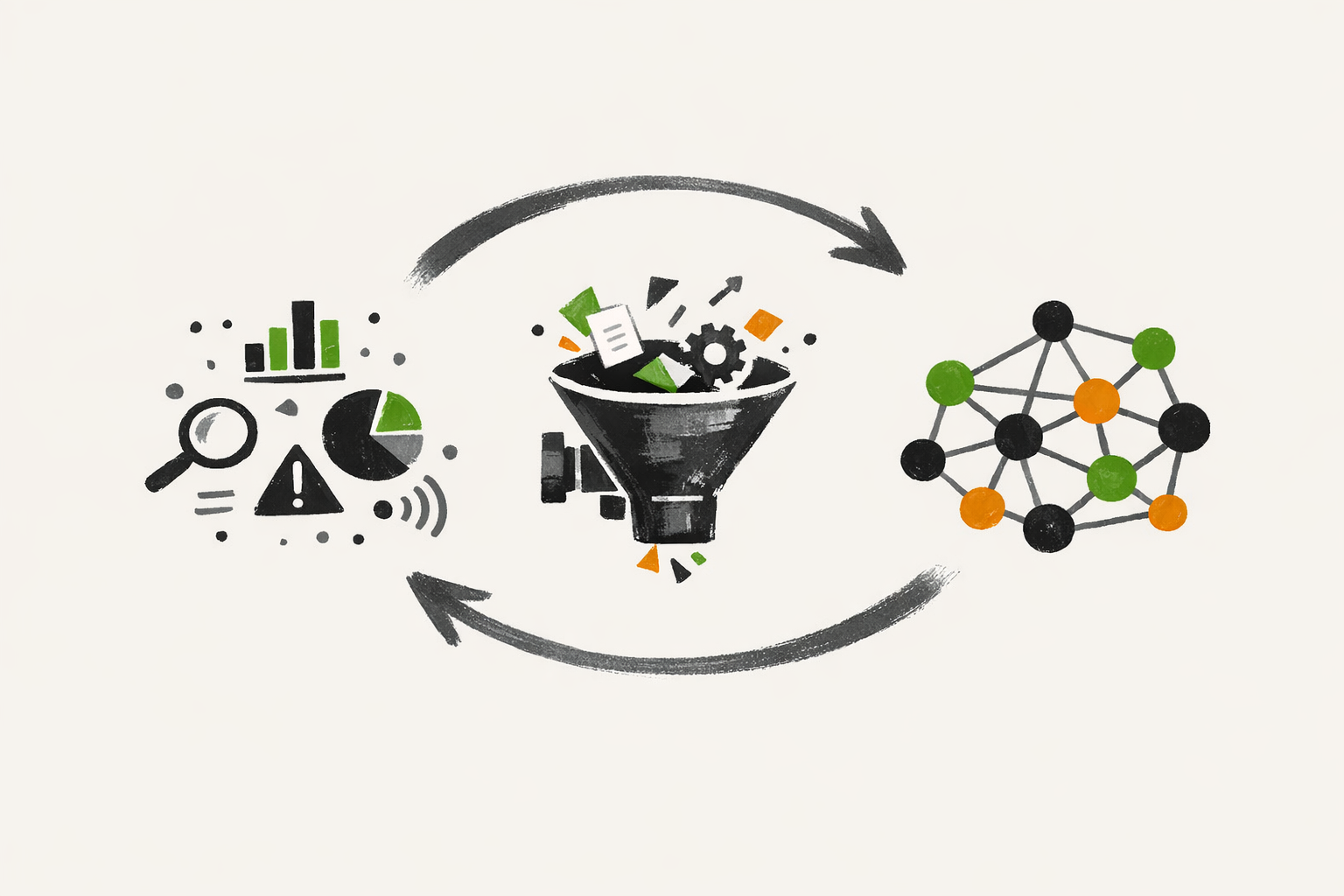
This is also where collaborative infrastructure matters. FIBRES is built to support seamless collaboration between multiple AI tools and human experts across several foresight activities, from scanning and weak signal detection to sensemaking and scenario work. The value does not come from AI alone, but from making different contributions work together in one shared flow.
What AI does not solve
AI does not remove the need for judgment; it amplifies it and magnifies the need for critical thinking and continuous testing. It can be exhausting. AI does not know which uncertainty matters most for a specific organization, so experts always need to be included. It is not aware of whether assumptions are politically sensitive, or which strategic option should be pursued despite incomplete evidence. It can support comparison and reflection, but it does not carry responsibility for interpretation or choices about the next step.
This matters because foresight is not only an information task. It is a social and strategic task. Organizations still need people who can question frames, facilitate difficult conversations, connect insights to decision timing, and hold space for ambiguity when no single answer is available.
Without that human layer, AI can easily reinforce existing blind spots. It may mirror dominant assumptions, produce plausible but shallow synthesis, or encourage teams to confuse fluency with understanding. In foresight, that is a serious risk, because well-written outputs can hide weak reasoning surprisingly well.
The opportunity: better foresight flow
The strongest case for AI in futures work is not that it makes foresight automatic. It is that it can help foresight become more continuous. When repetitive tasks are lighter, more people can contribute signals, more material can stay connected over time, and more foresight inputs can remain usable inside decision processes.
This points to a broader shift in habits. Instead of treating foresight as a sequence of projects, organizations can begin to treat it as an ongoing learning system supported by both humans and AI. That does not make the work easier in every sense, but it can make it more cumulative, more collaborative, and more actionable.
In that sense, AI is not breaking futures work simply by adding new tools. It is stressing the processes, exposing which old habits were fragile to begin with: isolated scanning, static outputs, manual loops, and weak links to decisions. If those habits change, AI may strengthen foresight. If they do not, it may only help organizations repeat old patterns at a higher speed.
The discussion around AI and foresight is only beginning. If you are exploring similar questions, experimenting with AI tools, or rethinking foresight practices, let’s connect and share experiences.

Anna Grabtchak Client Executive at FIBRES, supporting foresight, strategy, and innovation teams in translating insights into actionable outcomes. She is also a doctoral researcher at the Finland Futures Research Center, where her work focuses on foresight maturity and the integration of futures intelligence into organizational strategy.
Stay in the loop
Get our latest foresight tips delivered straight to your inbox. You may unsubscribe from these communications at any time.