
AI made foresight faster. Why some teams still struggle to turn it into strategy?
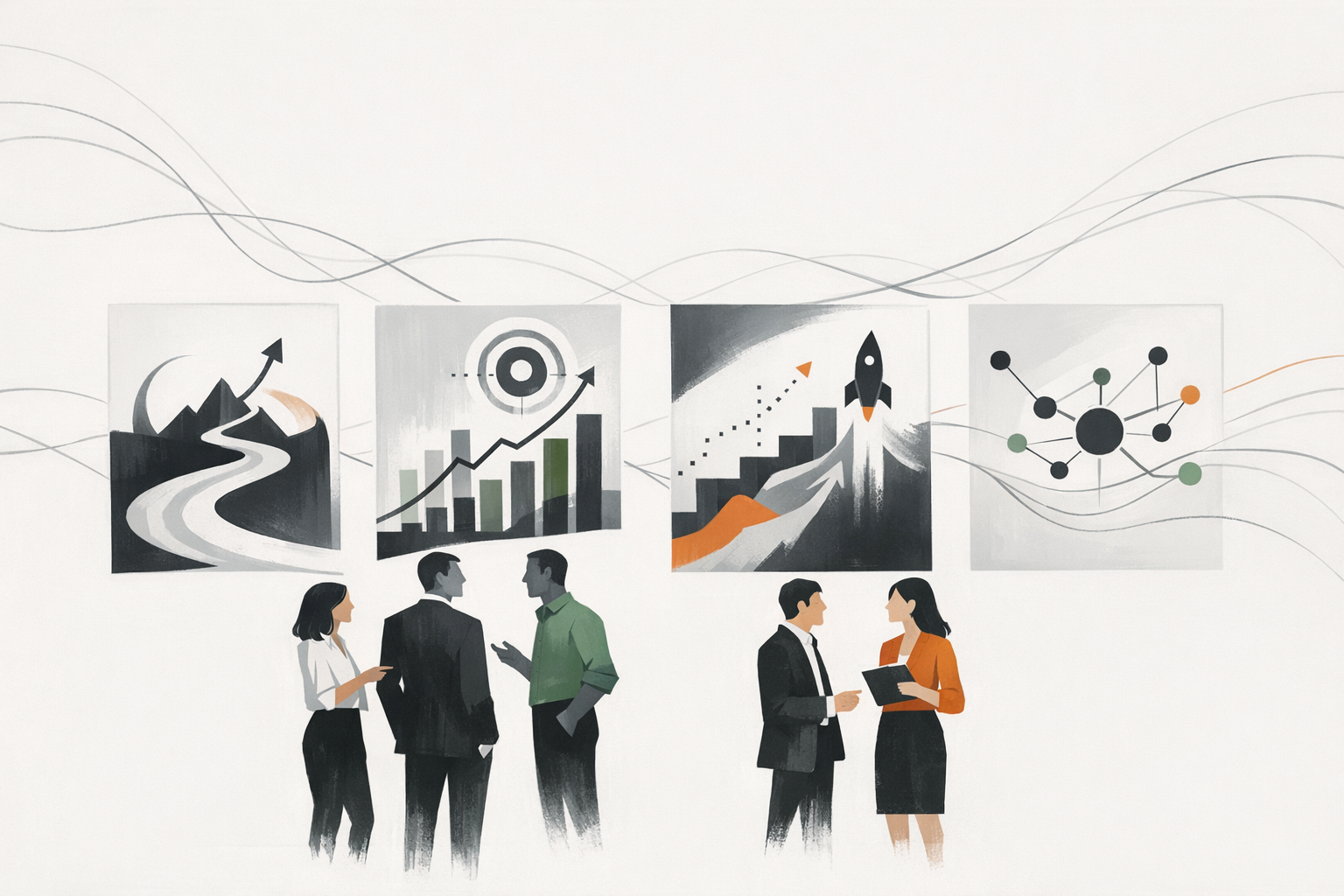
AI can generate a trend report in ten minutes. Your leadership can ignore it in ten seconds.
That’s the uncomfortable truth many foresight, strategy, and innovation teams are discovering right now. Agentic AI has transformed horizon scanning, weak-signal detection, and trend drafting. What once took weeks can now happen overnight.
But speed alone doesn’t create impact.
As FIBRES CEO Panu Kause put it in a recent webinar: “You shouldn’t see AI results as the end of foresight work. They are a starting point for deeper human engagement.”
If your AI-powered foresight isn’t shaping decisions, budgets, or roadmaps, you don’t have a future-ready organization. You just have faster PDFs.
Why fast scans aren’t enough
Across industries, foresight teams are under pressure to deliver more signals, more trends, more scenarios. And all of that on shorter timelines. AI makes that possible. It can:
-
Scan thousands of sources across geographies and domains
-
Cluster weak signals into emerging patterns
-
Draft trend descriptions and technology profiles
-
Outline scenarios based on key uncertainties
Yet a familiar problem remains: There’s little value in a beautifully formatted foresight report if it doesn’t influence real decisions. Or, as Panu said: “There’s zero value in foresight deliverables unless they lead into action, because only action creates impact.”
The real bottleneck in modern foresight isn’t scanning. It’s ownership.
What AI does brilliantly in foresight workflows
Used well, agentic AI is transformative in the middle of the process. It removes the mechanical grind that slows even the best teams down:
-
Horizon scanning at massive scale and speed across trusted global sources
-
Signal clustering and early trend discovery
-
First-draft summaries and translations
-
Automated research plans and monitoring cycles
That shift matters. Instead of spending weeks collecting material, foresight professionals can focus on what actually differentiates them: Interpretation. Judgment. Strategic storytelling. Stakeholder engagement. In other words, making foresight matter.
Why humans must stay in the loop
Foresight isn’t just pattern recognition. It’s sense-making in a specific organizational context.
Humans contribute what AI can’t:
-
Strategic interpretation — What does this trend mean for our business model, market, or technology roadmap?
-
Shared ownership — Engaging leaders and teams so insights stick.
-
Cultural change — Normalizing long-term thinking and multiple futures.
-
Decision translation — Turning insights into investments, portfolio shifts, and risk responses.
Panu summarized the emerging best practice simply: “Human at the start, AI in the middle, human at the end. That’s the foresight workflow we see emerging.”
The human-in-the-loop foresight workflow
High-impact foresight teams are converging on a hybrid model that combines AI scale with human depth.
1) Define & prepare (human)
Frame the strategic purpose.
Set research questions.
Clarify how this work will influence decisions.
Engage key stakeholders early, from strategy, risk, innovation, or R&D, so the outputs won’t land in a vacuum later.
2) Scan & process (AI)
Deploy AI agents for exploratory or continuous horizon scanning and signal detection.
Let the system:
-
Scan masses of sources and data feeds
-
Surface emerging issues
-
Cluster related developments
-
Draft initial trend candidates and scenarios
This is where speed and scale shine.
3) Interpret & act (human)
Bring people back into the loop.
Run collaborative sense-making sessions.
Challenge assumptions.
Prioritize what matters most.
Then translate insights into:
-
Strategic options
-
Innovation themes
-
Emerging risk portfolios
-
Technology investment theses
Publish living trend radars and foresight network maps rather than one-off slide decks so leadership can track change over time.
That’s how foresight becomes infrastructure, not an annual exercise.
What this looks like in practice (by team)
Strategy teams
Stress-test plans against scenarios. Link future assumptions directly to roadmaps and capital allocation.
Risk & resilience teams
Monitor weak signals continuously, cluster them into emerging risk themes, and maintain early-warning radars with full evidence trails.
Innovation teams
Separate signal from hype, align exploration portfolios, and focus investment on opportunity spaces that are actually forming.
R&D leaders
Track emerging technologies across papers and patents, cluster signals into trajectories, and build defensible long-term bets.
Different mandates. Same need: foresight that feeds decisions.
Are you stuck in “fast but forgettable” foresight?
If any of these sound familiar, a hybrid workflow could change your impact:
-
Your scanning is faster, but stakeholder buy-in is slower
-
Insights live in decks instead of strategy cycles
-
Leaders question where claims come from
-
Radars are outdated the moment they’re published
-
Foresight depends on a few heroic individuals
That’s the danger of AI-only foresight that produces outputs but not alignment.
Why skipping the human steps backfires
When organizations lean too hard on automation, foresight becomes efficient but strategically irrelevant.
Common symptoms include:
-
Stakeholders disengaged because they weren’t part of the process
-
Knowledge trapped in silos
-
No shared learning across functions
-
Great insights… quietly ignored
The result? Foresight that looks productive on paper, but never reshapes strategy.
Key takeaways for foresight leaders
If you want AI-powered foresight to drive real impact:
-
Use AI to accelerate scanning and synthesis, not to replace judgment
-
Engage decision-makers at the start and end of the work, or cycle
-
Treat AI outputs as first drafts, not final answers
-
Embed insights into planning, innovation, and risk cycles
-
Replace static reports with living foresight systems
Speed matters. But only when it leads somewhere.
How FIBRES supports human-in-the-loop foresight
FIBRES was built specifically for this hybrid approach. It combines secure, professional-grade AI agents with collaborative workspaces so teams can:
-
Run continuous or on-demand horizon scanning
-
Build exploratory and ad-hoc radars without the fear of sunken cost
-
Capture signals from across the organization
-
Cluster weak signals into real trends
-
Maintain a shared trend library
-
Build interactive trend and technology radars
-
Translate insights into scenarios and strategic options
-
Export executive-ready briefings in minutes
In short: FIBRES helps you move from scans to strategy without losing rigor, ownership, or credibility.
Ready to see how this works in your organization?
Bring one topic you’re already monitoring. We’ll show you how to run it end-to-end from weak signals to a living radar to a decision-ready briefing.
→ Explore a live trend radar
→ See FIBRES in action
The future is already sending signals. FIBRES helps you listen together and act with confidence.
FAQ
What is AI horizon scanning?
AI horizon scanning uses automated agents to scan large volumes of source publications and surface emerging insights, issues, and weak signals earlier than manual methods
What is human-in-the-loop foresight?
It’s a foresight approach where humans define the questions and make the decisions, while AI accelerates scanning, clustering, and drafting in between.
How do you turn trend insights into strategy when AI accelerates everything?
By engaging stakeholders early, linking trends to scenarios and options, and embedding outputs into planning, innovation, and risk processes, rather than publishing standalone reports as fast as AI can produce them.
What makes a foresight platform different from generic AI tools?
A true foresight platform connects scanning, sense-making, collaboration, visualization, and decision support in one system so insights compound over time instead of disappearing after each project.

Dani Pärnänen The Chief Product Officer at FIBRES. With a background in software business and engineering and a talent for UX, Dani crafts cool tools for corporate futurists and trend scouts. He's all about asking the right questions to understand needs and deliver user-friendly solutions, ensuring FIBRES' customers always have the best experience.
Stay in the loop
Get our latest foresight tips delivered straight to your inbox. You may unsubscribe from these communications at any time.